
Predict post-operative infection risk with AI
Periscope analyses patient data directly in your EHR to predict which patients are at risk of post-operative infections, helping surgical teams make faster, more confident decisions.

CE-marked medical device (EU MDR)
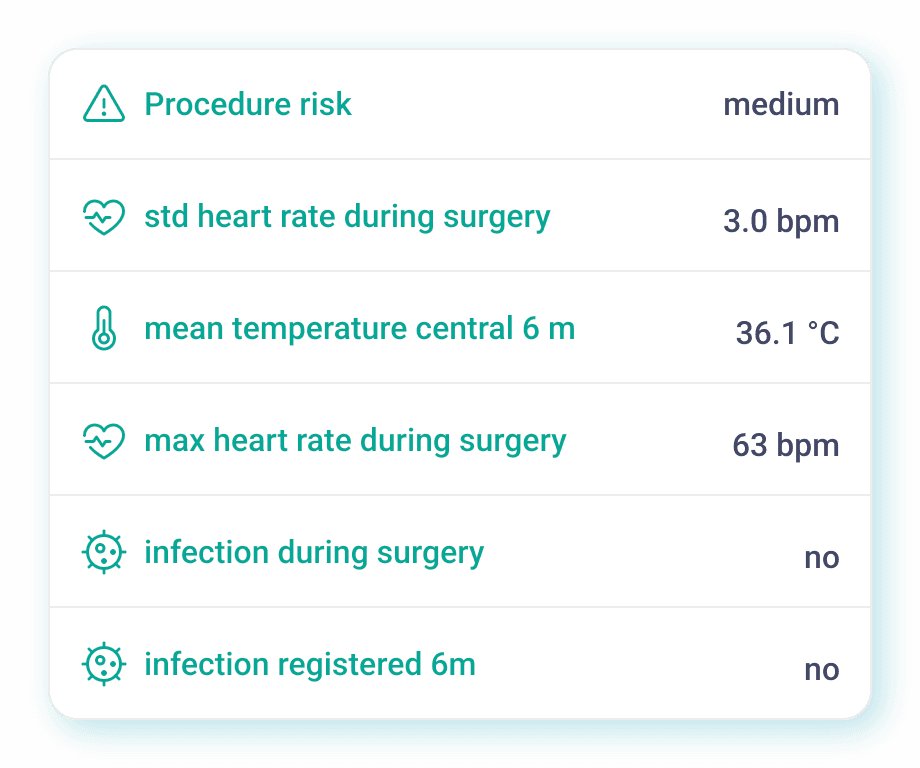
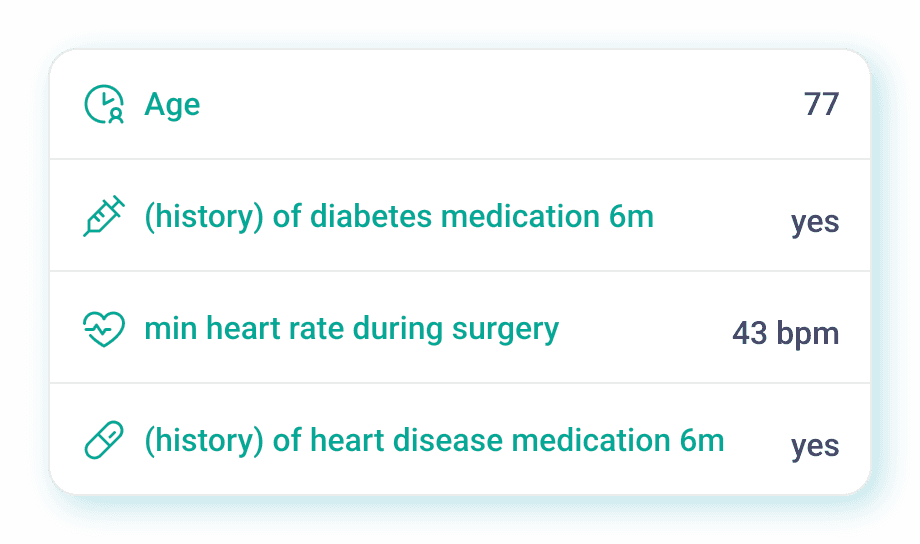
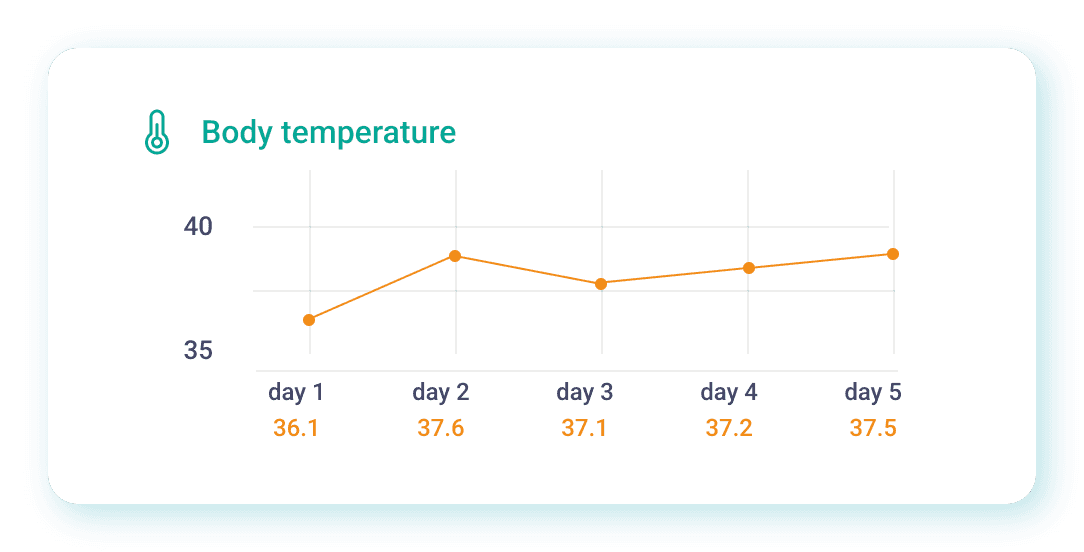
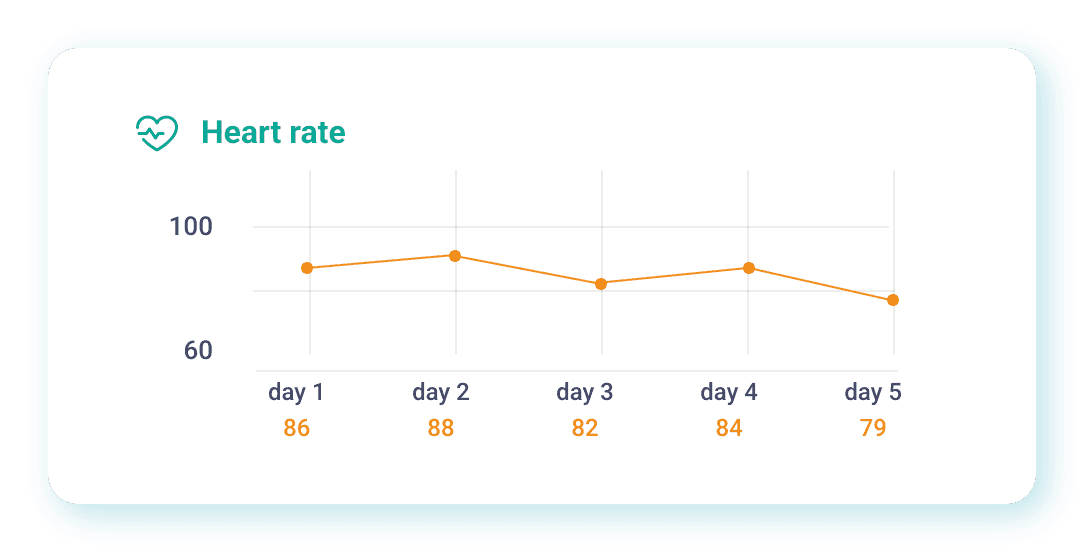
Integrates to your EHR
PERISCOPE® integrates directly into your electronic health record interface. No extra logins, no additional data entry, no workflow changes.
Integrates to your EHR
PERISCOPE® integrates directly into your electronic health record interface. No extra logins, no additional data entry, no workflow changes.
Integrates to your EHR
PERISCOPE® integrates directly into your electronic health record interface. No extra logins, no additional data entry, no workflow changes.
Predicts infection risk
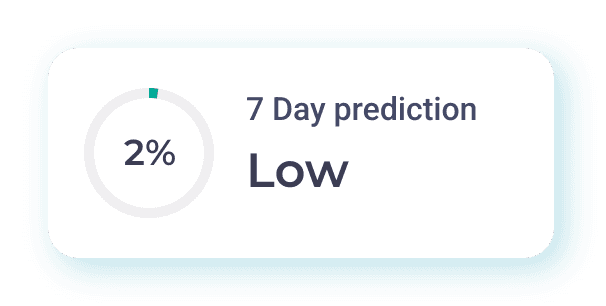
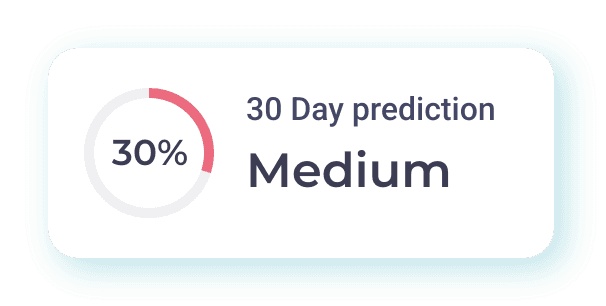
Immediately after surgery, you receive a 7-day and 30-day risk prediction based on each patient's clinical data.
Predicts infection risk
Immediately after surgery, you receive a 7-day and 30-day risk prediction based on each patient's clinical data.
Predicts infection risk
Immediately after surgery, you receive a 7-day and 30-day risk prediction based on each patient's clinical data.
Supports your decisions
Clear risk categories and the top contributing factors help you prioritize follow-up care. You decide what action to take.
Supports your decisions
Clear risk categories and the top contributing factors help you prioritize follow-up care. You decide what action to take.
Supports your decisions
Clear risk categories and the top contributing factors help you prioritize follow-up care. You decide what action to take.
Spot risk before symptoms show
Infections are often caught around day 9, when treatment options are limited and costs have already escalated.
Focus care where it matters
Without risk stratification, every patient gets the same follow-up, stretching your team thin.
Reduce costs, improve outcomes
Post-operative infections double to hospital stays, increase readmissions, and cost hospitals millions each year.

Spot risk before symptoms show
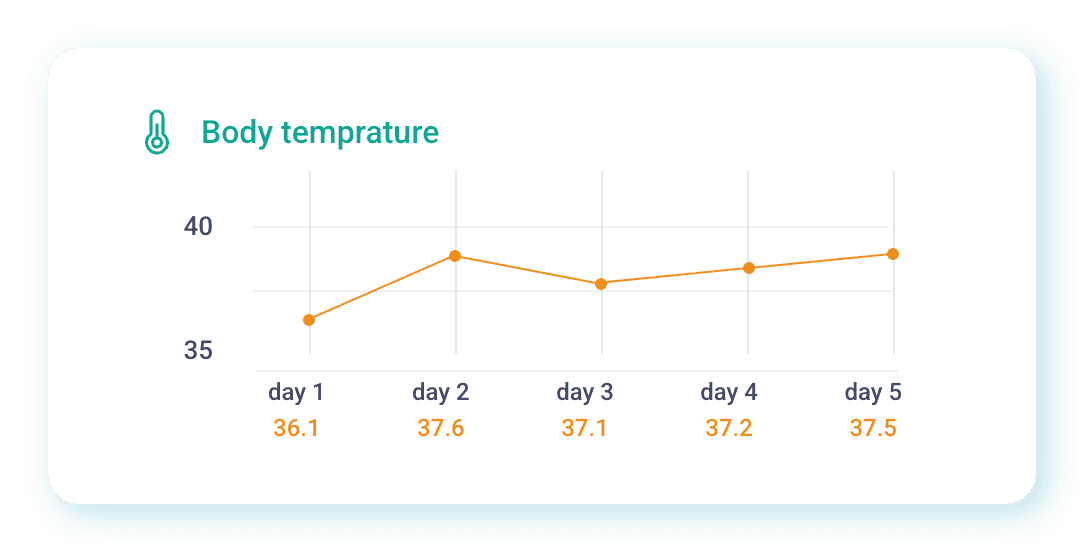
Infections are often caught around day 9, when treatment options are limited and costs have already escalated.
Focus care where it matters
Without risk stratification, every patient gets the same follow-up, stretching your team thin.
Reduce costs, improve outcomes
Post-operative infections double to hospital stays, increase readmissions, and cost hospitals millions each year.
Spot risk before symptoms show
Infections are often caught around day 9, when treatment options are limited and costs have already escalated.
Focus care where it matters
Without risk stratification, every patient gets the same follow-up, stretching your team thin.

Reduce costs, improve outcomes
Post-operative infections double to hospital stays, increase readmissions, and cost hospitals millions each year.

Trusted by leading hospitals
Validated and implemented at leading medical centers of excellence.










Trusted by leading hospitals
Validated and implemented at leading medical centers of excellence.
Trusted by leading hospitals
Validated and implemented at leading medical centers of excellence.
What clinicians say

"We've built clear clinical pathways around the risk scores. High-risk means closer monitoring and earlier labs. Low-risk means more confidence when discharging."
Boris de Cort, MD Surgical Resident, Deventer Ziekenhuis

"A no-brainer! Improving quality, saving cost and state of the art technology…"
Dr. Freek Daams, MD, PhD Upper GI & HPB Surgeon, Amsterdam UMC
"We've built clear clinical pathways around the risk scores. High-risk means closer monitoring and earlier labs. Low-risk means more confidence when discharging."
Boris de Cort, MD Surgical Resident, Deventer Ziekenhuis
"A no-brainer! Improving quality, saving cost and state of the art technology…"
Dr. Freek Daams, MD, PhD Upper GI & HPB Surgeon, Amsterdam UMC
"We've built clear clinical pathways around the risk scores. High-risk means closer monitoring and earlier labs. Low-risk means more confidence when discharging."
Boris de Cort, MD Surgical Resident, Deventer Ziekenhuis
"A no-brainer! Improving quality, saving cost and state of the art technology…"
Dr. Freek Daams, MD, PhD Upper GI & HPB Surgeon, Amsterdam UMC
"We've built clear clinical pathways around the risk scores. High-risk means closer monitoring and earlier labs. Low-risk means more confidence when discharging."
Boris de Cort, MD Surgical Resident, Deventer Ziekenhuis
"A no-brainer! Improving quality, saving cost and state of the art technology…"
Dr. Freek Daams, MD, PhD Upper GI & HPB Surgeon, Amsterdam UMC
"We've built clear clinical pathways around the risk scores. High-risk means closer monitoring and earlier labs. Low-risk means more confidence when discharging."
Boris de Cort, MD Surgical Resident, Deventer Ziekenhuis
"A no-brainer! Improving quality, saving cost and state of the art technology…"
Dr. Freek Daams, MD, PhD Upper GI & HPB Surgeon, Amsterdam UMC
"We've built clear clinical pathways around the risk scores. High-risk means closer monitoring and earlier labs. Low-risk means more confidence when discharging."
Boris de Cort, MD Surgical Resident, Deventer Ziekenhuis
"A no-brainer! Improving quality, saving cost and state of the art technology…"
Dr. Freek Daams, MD, PhD Upper GI & HPB Surgeon, Amsterdam UMC
Surgical patients develops
a post-operative infection
0%
0%
0%
0%
Average detection time,
often too late for optimal intervention
0 days
0 days
0 days
0 days
Annual infection-related
costs per hospital
€0M
€0M
€0M
€0M
Questions you might have
Is PERISCOPE® a diagnostic tool?
No. PERISCOPE® is a clinical decision-support system. It predicts infection risk to inform your decisions, not replace your clinical judgment. All treatment choices remain with your medical team.
Is PERISCOPE® a diagnostic tool?
No. PERISCOPE® is a clinical decision-support system. It predicts infection risk to inform your decisions, not replace your clinical judgment. All treatment choices remain with your medical team.
Is PERISCOPE® a diagnostic tool?
No. PERISCOPE® is a clinical decision-support system. It predicts infection risk to inform your decisions, not replace your clinical judgment. All treatment choices remain with your medical team.
How does it fit into our current workflow?
PERISCOPE® integrates directly into your EHR. Predictions appear automatically after surgery. There's no additional data entry, no separate system to check, and no extra steps for your staff.
How does it fit into our current workflow?
PERISCOPE® integrates directly into your EHR. Predictions appear automatically after surgery. There's no additional data entry, no separate system to check, and no extra steps for your staff.
How does it fit into our current workflow?
PERISCOPE® integrates directly into your EHR. Predictions appear automatically after surgery. There's no additional data entry, no separate system to check, and no extra steps for your staff.
What evidence supports PERISCOPE®?
PERISCOPE® is CE-certified as a Class IIa medical device under EU MDR. It has been independently validated in multiple European medical centers of excellence and is backed by peer-reviewed clinical studies. We meet ISO 13485 and ISO 27001 standards.
What evidence supports PERISCOPE®?
PERISCOPE® is CE-certified as a Class IIa medical device under EU MDR. It has been independently validated in multiple European medical centers of excellence and is backed by peer-reviewed clinical studies. We meet ISO 13485 and ISO 27001 standards.
What evidence supports PERISCOPE®?
PERISCOPE® is CE-certified as a Class IIa medical device under EU MDR. It has been independently validated in multiple European medical centers of excellence and is backed by peer-reviewed clinical studies. We meet ISO 13485 and ISO 27001 standards.
How long does implementation take?
Typically 8 to 12 weeks, depending on your EHR system. We manage the technical integration, so IT burden is minimal.
How long does implementation take?
Typically 8 to 12 weeks, depending on your EHR system. We manage the technical integration, so IT burden is minimal.
How long does implementation take?
Typically 8 to 12 weeks, depending on your EHR system. We manage the technical integration, so IT burden is minimal.
